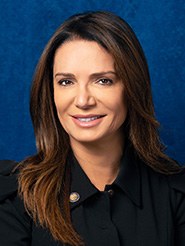
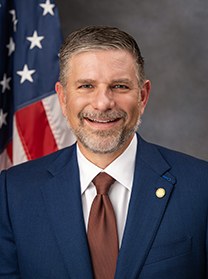
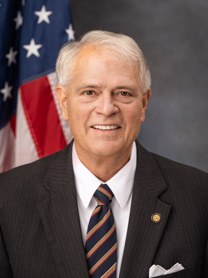
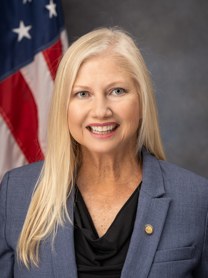
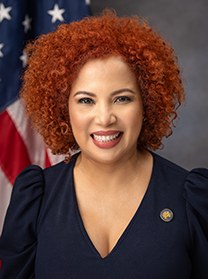
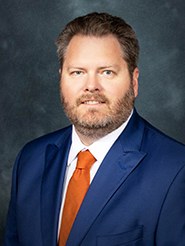
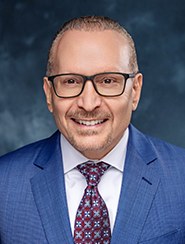
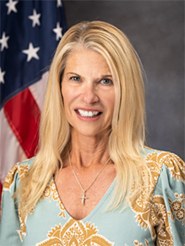
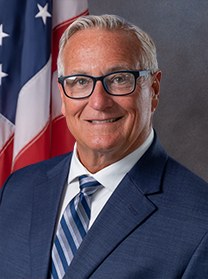
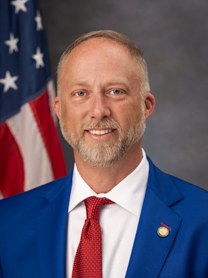
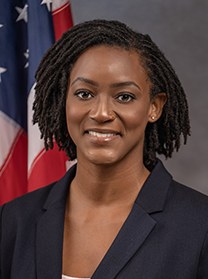
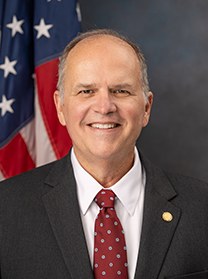
The rating measures one thing: how a legislator has voted on, sponsored and spoken about bills that FBBA supports. Positions come only from fbba.io: the track record on the Policy page and its list of Current Legislative Proposals. 16 tracked bills count as FBBA-supported. The score has three parts that add up to 100 points.
- Votes, 60 points. Across the FBBA-supported bills that reached a floor vote, the member earns:
60 × Yea ÷ (Yea + Nay)
Only votes the member cast count. Not voting (NV), absent and not in office are left out, so missing a vote never counts against a member. The tracked vote is the third-reading passage roll call in each chamber. A Yea or Nay recorded in the chamber journal after the roll call closed counts as cast. A position an absent member stated afterward is not a vote and does not count. - Leadership, 20 points. Each FBBA-supported bill the member sponsored earns 10 points. Each one the member co-sponsored earns 5. The total is capped at 20. A bill counts once.
- Public statements, 20 points. Each sourced statement is marked supportive (+1), critical (−1) or mixed or neutral (0). Mixed and neutral statements count toward neither side.
10 + 10 × (positive − negative) ÷ (positive + negative + 1)
A member with no statements on file earns the neutral 10 points.
The score is the sum of the three parts, rounded to a whole number (a half point rounds up).
Grade cutoffs| Grade | Score |
|---|
| 85 and above |
| 70 to 84 |
| 55 to 69 |
| 40 to 54 |
| Under 40 |
Limited record. A member with no counted votes but at least one sponsorship or statement still gets a grade, marked “Limited record”. With no votes to measure, the vote part takes the neutral midpoint of 30 points, the same way a member with no statements takes 10. Not yet rated. A member with no counted votes, no sponsorships and no statements gets no grade and is listed after every rated member. The records show these members were not in office for any of the tracked votes.
Ranking. House and Senate members are ranked together, highest score first. Members with the same score are ordered by last name, so a tie shows as consecutive ranks. 151 members are ranked. Vacant seats (5) are listed without a rank.
These 16 bills carry the FBBA position “Support”. Each links to its official page and names the fbba.io item it maps to. A companion bill has the same title as a bill the track record names and moved in the other chamber.
HB 175 (2026) Payment Stablecoin
Creates a state licensing framework for payment stablecoin issuers, modeled on the federal GENIUS Act.
Status: Became law as Chapter 2026-176, Laws of Florida.
FBBA position used: Support. Named on the fbba.io policy page.
Source: fbba.io policy page track record, “2026 HB 175: Nation's First State GENIUS Act Framework”. Has a recorded floor vote.
HB 183 (2026) Investments and Deposits of Public Funds
Would let the state invest part of its public funds in digital assets.
Status: Died in Insurance & Banking Subcommittee.
FBBA position used: Support. Matches a proposal on the fbba.io policy page.
Source: fbba.io policy page proposals list, “Creating A Strategic Bitcoin Reserve for the State of Florida”. No floor vote; credit is for sponsorship only.
SB 198 (2026) Virtual Currency Kiosks
Senate companion to 2026 HB 505 on virtual currency kiosks.
Status: Laid on the table after a companion bill passed.
FBBA position used: Support. Companion of a bill named on the fbba.io policy page.
Source: fbba.io policy page track record, “2026 HB 505: Smart Kiosk Regulation”. No floor vote; credit is for sponsorship only.
SB 314 (2026) Payment Stablecoin
Senate companion to 2026 HB 175 on payment stablecoin issuers.
Status: Laid on the table after a companion bill passed.
FBBA position used: Support. Companion of a bill named on the fbba.io policy page.
Source: fbba.io policy page track record, “2026 HB 175: Nation's First State GENIUS Act Framework”. No floor vote; credit is for sponsorship only.
HB 505 (2026) Virtual Currency Kiosks
Sets registration, disclosure, receipt and refund rules for virtual currency kiosk businesses in Florida.
Status: Became law as Chapter 2026-178, Laws of Florida.
FBBA position used: Support. Named on the fbba.io policy page.
Source: fbba.io policy page track record, “2026 HB 505: Smart Kiosk Regulation”. Has a recorded floor vote.
SB 1038 (2026) Florida Strategic Cryptocurrency Reserve
Would create a Florida Strategic Cryptocurrency Reserve.
Status: Died in Appropriations Committee on Agriculture, Environment, and General Government.
FBBA position used: Support. Matches a proposal on the fbba.io policy page.
Source: fbba.io policy page proposals list, “Creating A Strategic Bitcoin Reserve for the State of Florida”. No floor vote; credit is for sponsorship only.
HB 1039 (2026) Establishment and Administration of a State Cryptocurrency Reserve
Would create a State Cryptocurrency Reserve.
Status: Died on Second Reading Calendar.
FBBA position used: Support. Matches a proposal on the fbba.io policy page.
Source: fbba.io policy page proposals list, “Creating A Strategic Bitcoin Reserve for the State of Florida”. No floor vote; credit is for sponsorship only.
SB 1040 (2026) Trust Funds/Florida Cryptocurrency Reserve
Would create the trust fund that holds the Florida cryptocurrency reserve.
Status: Died in Appropriations Committee on Agriculture, Environment, and General Government.
FBBA position used: Support. Matches a proposal on the fbba.io policy page.
Source: fbba.io policy page proposals list, “Creating A Strategic Bitcoin Reserve for the State of Florida”. No floor vote; credit is for sponsorship only.
HB 1415 (2026) Use of Digital Currency by the Department of Financial Services
House companion to 2026 SB 1568 on the state stablecoin pilot program.
Status: Laid on the table after a companion bill passed.
FBBA position used: Support. Companion of a bill named on the fbba.io policy page.
Source: fbba.io policy page track record, “2026 SB 1568: State Stablecoin Pilot Program”. No floor vote; credit is for sponsorship only.
SB 1568 (2026) Use of Digital Currency by the Department of Financial Services
Creates a pilot program that lets the Department of Financial Services accept payment stablecoins.
Status: Became law as Chapter 2026-175, Laws of Florida.
FBBA position used: Support. Named on the fbba.io policy page.
Source: fbba.io policy page track record, “2026 SB 1568: State Stablecoin Pilot Program”. Has a recorded floor vote.
HB 487 (2025) Investments of Public Funds in Bitcoin
Would let the state invest public funds in bitcoin.
Status: Died in Government Operations Subcommittee.
FBBA position used: Support. Matches a proposal on the fbba.io policy page.
Source: fbba.io policy page proposals list, “Creating A Strategic Bitcoin Reserve for the State of Florida”. No floor vote; credit is for sponsorship only.
SB 550 (2025) Investments of Public Funds in Bitcoin
Would let the state invest public funds in bitcoin.
Status: Died in Banking and Insurance.
FBBA position used: Support. Matches a proposal on the fbba.io policy page.
Source: fbba.io policy page proposals list, “Creating A Strategic Bitcoin Reserve for the State of Florida”. No floor vote; credit is for sponsorship only.
HB 7049 (2023) Central Bank Digital Currency
House companion to 2023 SB 7054 that bans central bank digital currency as money.
Status: Laid on the table after a companion bill passed.
FBBA position used: Support. Companion of a bill named on the fbba.io policy page.
Source: fbba.io policy page track record, “2023 SB 7054: Banning Central Bank Digital Currencies”. No floor vote; credit is for sponsorship only.
SB 7054 (2023) Central Bank Digital Currency
Defines central bank digital currency and keeps it out of the Uniform Commercial Code definition of money in Florida.
Status: Became law as Chapter 2023-80, Laws of Florida.
FBBA position used: Support. Named on the fbba.io policy page.
Source: fbba.io policy page track record, “2023 SB 7054: Banning Central Bank Digital Currencies”. Has a recorded floor vote.
HB 273 (2022) Money Services Businesses
Revises Florida's money services business law, including rules for money transmitters that receive virtual currency.
Status: Became law as Chapter 2022-113, Laws of Florida.
FBBA position used: Support. Named on the fbba.io policy page.
Source: fbba.io policy page track record, “2022 HB 273: MTL Digital Asset Reforms”. Has a recorded floor vote.
SB 486 (2022) Money Services Businesses
Senate companion to 2022 HB 273 on money services businesses and virtual currency.
Status: Laid on the table after a companion bill passed.
FBBA position used: Support. Companion of a bill named on the fbba.io policy page.
Source: fbba.io policy page track record, “2022 HB 273: MTL Digital Asset Reforms”. No floor vote; credit is for sponsorship only.
The data tracks these bills, but fbba.io does not name them or describe a matching item, so they are not scored. They do not raise or lower anyone’s rating.
HB 1087 (2026) Pub. Rec./Office of Financial Regulation
Extends Office of Financial Regulation public-records exemptions to virtual currency businesses and payment stablecoin issuers.
Status: Became law as Chapter 2026-130, Laws of Florida.
Not counted. A public records exemption for the Office of Financial Regulation. No item on the fbba.io policy page names it or describes it.
HB 515 (2025) Uniform Commercial Code
Updates Florida's Uniform Commercial Code rules on controllable electronic records, the legal category that covers digital assets.
Status: Became law as Chapter 2025-92, Laws of Florida.
Not counted. Updates the Uniform Commercial Code rules for controllable electronic records. The fbba.io proposals list has a good funds item for real estate, which is a different subject.
85 sourced statements are on file, last collected October 19, 2026. A legislator who wants a statement considered can contact FBBA through the contact page.
How statements are collected and checked
Deterministic search plus one model extraction step plus deterministic verification. Exa web search ran two queries per member (cryptocurrency/bitcoin/blockchain/digital assets, and artificial intelligence/technology/innovation/startups), 6 results each, with page text cached. A Claude Sonnet 5.5 call (no tools, about 5 members per call, source text treated as data) extracted statements made by the legislator and assigned a stance per statement (1 supports tech/crypto/AI/FBBA-backed bills, -1 calls for bans or heavy restrictions or opposes those bills, 0 mixed or neutral; strict, 0 when unsure). Code then kept a statement only if the quote appears verbatim in the cached text for that exact URL (after normalizing whitespace, curly quotes and dashes), the member's family name appears within 400 characters of the quote (exception: the page is authored by that member, meaning a byline, a Florida Politics guest column headed with the member's name, the member's official House or Senate release, the member's own campaign site, or the member's own LinkedIn post), the page mentions Florida, the quote is 60 words or fewer, and the page date is 2019 or later (or unknown). Dates come from the search engine's published date. No overall scores are computed here. Most members have no sourced statements; empty lists are expected.
Each card lists the incorporated cities in the district, largest first, up to six with a count of the rest. A city is listed when at least 10 percent of its area is in the district or it covers at least 10 percent of the district. Counties are listed when they cover at least 2 percent of the district or at least 10 percent of the county is in it. Boundaries are the Census TIGER/Line 2024 files, which reflect Florida’s 2022 legislative maps. The address lookup uses the Census Geocoder with the same district numbers.
- Open States. Legislator names, parties and identifiers.
- Florida Senate. Senator roster and photos; bill pages, sponsors and floor roll-call records for both chambers.
- Florida House of Representatives. Representative roster and photos.
- Census TIGER/Line 2024. State legislative district, city and county boundaries used for the city and county lists. City ordering uses 2020 Census population.
- US Census Geocoder. Matches a typed address to its House and Senate districts.
Ratings reflect the Legislature seated for the 2026 session. Florida elects all 120 House seats and half of the Senate on November 3, 2026. FBBA will update this page after new members are sworn in.